
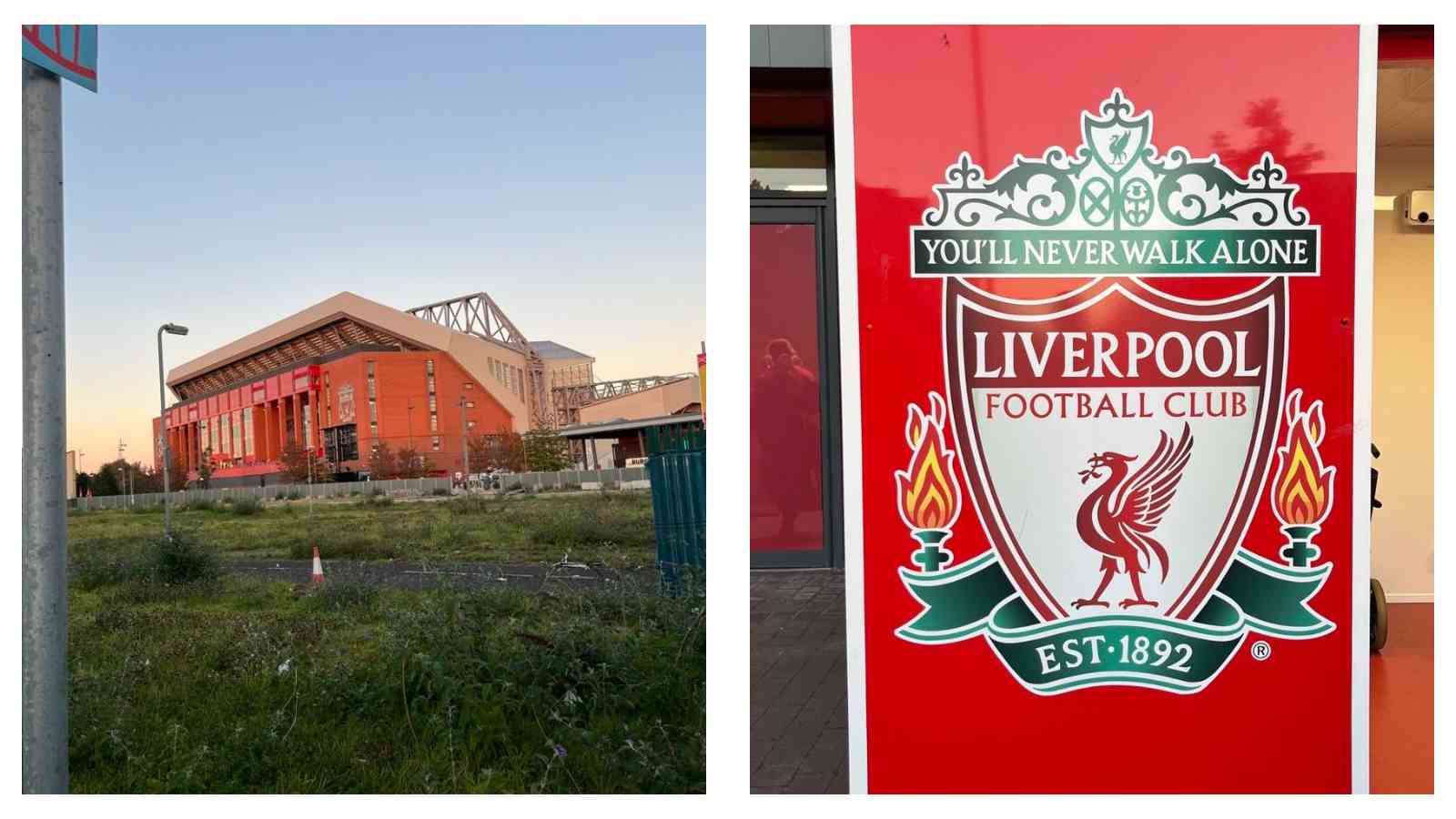
A consortium featuring Amazon founder Jeff Bezos and Facebook co-founder Eduardo Saverin has agreed a £1.65 billion deal to acquire a 30% stake in Liverpool from Fenway Sports Group (FSG).
The consortium, known as 1892 Holdings, is led by Amit Bhatia, who is set to become vice-chairman of the club.
Bhatia has received backing from the Mittal Family Trust, Bezos’s K5 Sports Fund and Saverin’s EE Capital.
Despite Bezos being the most high-profile name involved, he is understood to be a passive investor, represented by Bryan Baum of K5 Global.
The investment also represents Bhatia’s return to English football, having previously been co-owner and vice-chairman of Queens Park Rangers (QPR).
“To be welcomed as a partner in a club of this stature is a huge privilege. We are making this investment because we believe deeply in Liverpool and its leadership, and we look forward to supporting the club’s continued success for years to come,” Bhatia said in a statement.
The investment remains subject to regulatory approval, a process which could take up to 90 days.
What impact does this have on Liverpool?
The message coming from both Liverpool and FSG is that, despite the scale of the investment, it is business as usual at the club.
In a statement released by FSG, the owners made clear that they will remain in control of the club’s operations, and clarified the consortium’s role.
“The consortium partners will work with FSG and the club’s leadership team to evaluate opportunities that enhance the club’s objectives on and off the pitch,” FSG said.
Unfortunately for Liverpool supporters, the investment will not have any impact on the current transfer window, with the Red’s plans already in motion.
Instead, FSG believes the deal can help Liverpool expand its global reach and create commercial opportunities in emerging markets, and could increase revenues in the future to provide the club with greater financial resources to invest in future transfer windows.
The consortium is investing in Liverpool because it believes the club can increase in value, but it remains unclear exactly what its long-term ambitions are.
And that inevitably raises a much bigger question: is this the beginning of the end of FSG’s ownership of Liverpool?
The possibility is difficult to ignore given comments made by FSG president John Henry to the Boston Sports Journal in 2023.
“Will we be in England forever? No. Are we selling LFC? No. Are we talking with investors about LFC? Yes.”
The structure of this deal makes those comments particularly significant.
According to CNBC, the consortium could increase its stake and potentially become Liverpool’s majority shareholder at a valuation of around £6 billion within the next 12 months.
That does not mean a takeover is inevitable, but it does mean the current arrangement could look very different in the not-too-distant future.
YOU MAY ALSO LIKE: How Ronald Araujo could fit into Iraola’s Liverpool side
How FSG have grown Liverpool
FSG, then known as New England Sports Ventures (NESV), purchased Liverpool for £300 million in 2010 from Tom Hicks and George Gillett.
At the time, the club was on the brink of administration after being saddled with significant debt by its previous American owners, with creditors including RBS threatening to default their loans.
Had FSG not stepped in, Liverpool could have entered administration, potentially putting the club’s future at serious risk.
Since that fateful day, FSG have transformed Liverpool both on and off the pitch.
Forbes currently values Liverpool at £4.6 billion, making them one of the most valuable football clubs in the world and representing a huge increase on the £300 million FSG paid in 2010.
The growth of Premier League broadcasting rights has undoubtedly played a major role in that increase, but it is difficult to ignore the contribution FSG have made to Liverpool’s commercial and sporting development.
Under their ownership, Anfield has been redeveloped, increasing its capacity from around 45,000 to more than 60,000.
The club has also moved into a state-of-the-art training facility in Kirkby, secured major sponsorship and merchandising partnerships, and developed a sophisticated, data-driven approach to recruitment.
Those developments have coincided and resulted in one of the most successful periods in Liverpool’s history.
The £1.65 billion valuation attached to just 30% of the club is therefore a remarkable reflection of how much Liverpool’s value has increased under FSG, leaving them in a position to make nearly 20 times their initial investment if they decide to sell.
Growing American influence in the Premier League
Liverpool’s investment is also part of a much wider trend of American ownership in English football.
Chelsea, Arsenal, Manchester United, Everton, Fulham, Crystal Palace, Leeds United and Aston Villa are among the Premier League clubs with American ownership or significant American investment.
It appears that American investors still see enormous growth potential in the Premier League.
English football is already a global commercial powerhouse, but there is a belief among investors that its international audience has room to grow considerably.
That creates opportunities in broadcasting, sponsorship, merchandising, international events and digital media.
But the increasing presence of American investors also raises questions about oversight and the future direction of English football.
What exactly are these owners’ long-term plans?
How do they intend to preserve the connection between clubs and their local communities?
And how much influence should foreign investors have over the direction of the English game?
Ideas such as a 39th Premier League fixture being played overseas become easier to imagine in an era where the league is increasingly viewed as a global entertainment product.
So too does the possibility of renewed discussions around a European Super League.
These questions are becoming more relevant as the Premier League continues to grow as an international product.
That is why greater transparency from owners is important, and why the media must continue to scrutinise the intentions behind these investments rather than simply focusing on the headline figures.
A deal with huge ramifications for the future of Liverpool
While very little may change in the immediate term, the ramifications of this deal are significant for Liverpool.
An investment of this size demonstrates the enormous financial value that exists in Liverpool Football Club and gives the consortium a potential pathway to increase its ownership and, eventually, challenge FSG for control.
Yet where this goes from here is uncertain.
With Bezos, Bhatia and Saverin now among those putting money into the club, the deal is another indication of Liverpool’s extraordinary global reach, and of just how much investment potential remains in one of the biggest football clubs in the world.
READ NEXT: Enzo Maresca must ‘establish his own identity’ at Man City, says Lee Dixon
 Juliette White
  Michael Davey