
By Levi Wolf
The Football Association has put its name to many things over its 160-year history – national team kits, Wembley redevelopment and Grassroots funding programmes.
Now add this: a seat at the table of Britain’s first official esports national programme.
British Esports, the UK’s national esports federation, has been appointed as the lead organisation of the official Team GB national partner group for the inaugural Esports Nations Cup – joined by Fnatic, Esports Wales, Scottish Esports, the UK Esports Team Committee, and the FA through its England Gaming division.
The tournament runs in Riyadh, Saudi Arabia, from November 2-29, 2026.
The FA has moved from the sidelines to the inner circle, joining a collective of National Team Partners to provide the logistical and commercial backbone for Britain’s Riyadh campaign.
A proper structure
Jeff Simpkins has been appointed National Team Manager following an open application process.
His support staff are where things get interesting.
Michael ‘ODEE’ O’Dell – Founder of Team Diginitas, one of the most recognised organisations in European esports, with 18 world championships and competed across different titles under his watch.
He was also the first esports team manager to sell to a sports entity – the Philadelphia 76ers – a deal that signalled to the wider sports world that esports had commercial value.
Alongside him is Grant Rousseau, COO of NIP Group – the man who helped build Team Falcons into a back-to-back Esports World Cup champion, expanding the organisation across more than 20 titles in the process.
He did not inherit a winning machine; instead, he built one from the ground up in under three years.
These are people who have spent their careers building winning programmes in both competitive and commercial esports.
Player rosters are due to be confirmed by May 10, ahead of competition spanning over 100 nations across 16 titles – Valorant, Counter-Strike 2, League of Legends, Rocket League, and EA Sports FC among them.
The tournament carries $45 million in funding. Twenty million of that goes directly to players and coaches as prize money.
READ MORE: Who gets to wear the flag? Inside Esports Nations Cup eligibility rules
Why the FA’s name matters
Institutional credibility is a form of currency in sport.
When World Athletics sanctions a marathon, it matters.
If the ICC recognises a format, it counts. And when the FA lends its reputation to a national esports programme, that means something.
Esports has spent years fighting the same argument: It is not a real sport, or it isn’t properly governed. Those arguments are now considerably harder to make with FA backing.
This is the organisation that oversees England’s national teams, manages youth development pathways and governs football at every level of the pyramid.
Its involvement signals that Esports, at least in Britain, is no longer just a curiosity.
The FA’s wider Esports footprint
The FA’s involvement with the ENC is not a single event. Through its England Gaming initiative, the organisation has already spent several years building a presence in competitive gaming – particularly around football simulation titles like EA Sports FC.
England Gaming has fielded national teams in global FIFA and EA Sports competitions, including events like the FIFAe Nations series.
These programmes mirror traditional international football structures with players selected to represent England on a global stage.
Beyond elite competitions, there have been early steps towards grassroots integration.
Esports has featured in FA-led community education initiatives, with a focus on accessibility, digital skills and widening participation.
While still in its early stages compared to traditional pathways, it signals a longer-term interest in embedding gaming in the broader football ecosystem.
YOU MAY ALSO LIKE: The Esports World Cup effect: How Riyadh became the Esports capital of the world
The title that could define Britain’s campaign
Rainbow Six Siege is the game where FA backing could matter most.
Britain already has the players. Jack ‘Doki’ Robertson – who was teased in the announcement video – is one of the most decorated players in the game’s history, part of the G2 Esports core that won back-to-back Six Invitationals.
The talent has never been the problem. What has been missing is a structure around it – which is exactly what the FA’s involvement provides.
When a player of Doki’s standing commits to a national programme, it is not only because of the opportunity but also because of what the programme represents.
Britain’s shot at history
The Esports Nations Cup is new. But the ambition behind it is not small.
Riyadh has spent the last few years positioning itself as the capital of competitive gaming.
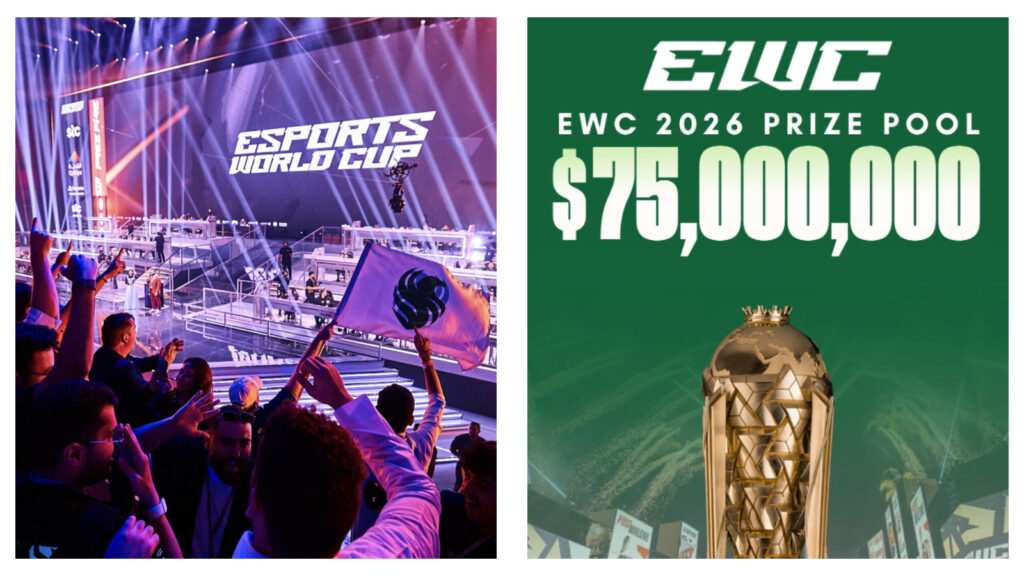
The city hosted the Esports World Cup last summer – drawing in audiences that could rival some traditional sporting events. The ENC is the next piece of that puzzle.
For British players, this is a genuine opportunity to represent their country on a major international stage.
The UK has produced elite-level talent across multiple titles for years. It has the competitive infrastructure, and it has the fanbase.
Now it has the FA. And it has people who helped build the industry from the ground up.
READ NEXT: NBA playoffs news: Houston Rockets turn up the pressure on LA Lakers with Game 5 victory
 Juliette White
  Michael Davey