
Levi Wolf
In football, the question of who can represent a nation has been debated for decades.
Eligibility turns on birthplace, parentage, residency and the rules of FIFA – a framework built through over a century of international competition.
It’s complicated, sometimes controversial and still being developed.
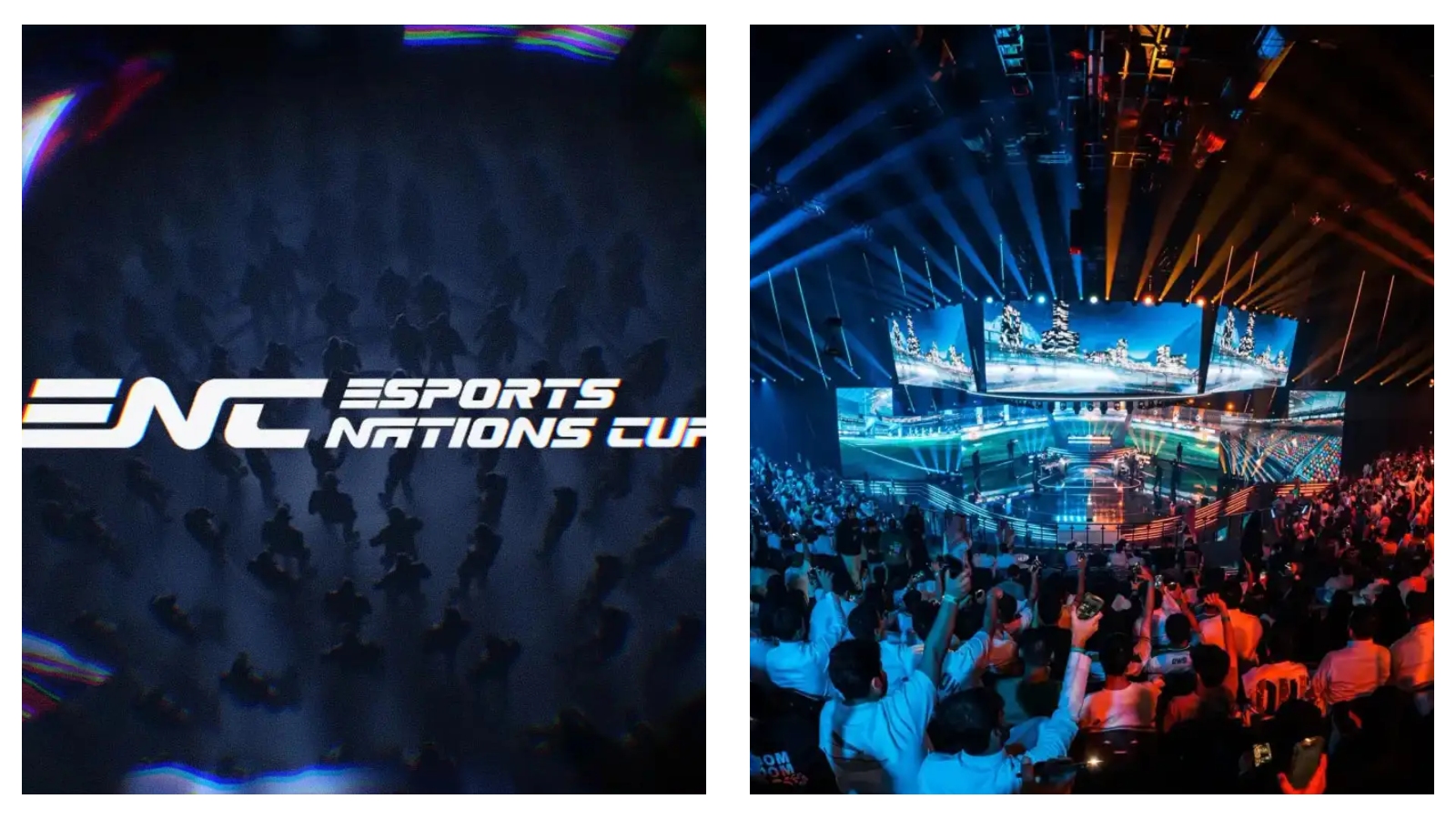
The Esports Nations Cup (ENC) is a first-time tournament, launching in November 2026. It is trying to answer the same question in a fraction of the time.
The basic rule
Players must hold valid citizenship for the nation they represent for a minimum continuous period of one year before the national roster lock date.
That citizenship must also remain valid for at least six months after the conclusion of the main event.
On the surface, that sounds like a good ruleset. You hold a passport, you are eligible.
But Esports has always operated differently from traditional sports, and complications quickly emerge once you look past the headline rule.
The publisher’s problem
For individual titles – like chess or fighting games – the ENC isn’t relying on passports at all.
Invitations for individual titles will be issued strictly in accordance with the nationality listed on the player’s official publisher-side profile or ranking account.
That means it’s the game’s own database rather than a government document that determines where a player competes first.
Players can request a nationality change, but those requests must be submitted and approved before the roster deadline and may require supporting documents, which is where ID verification could be required.
In practice, this creates a two-step system where the starting point is wherever the account was first registered, which may not reflect where they actually live.
For someone interested in more traditional sports who is used to the clarity of international football or athletics, it’s a strange way to determine nationality, but for Esports, it’s a reflection of how the industry has historically operated.
YOU MAY ALSO LIKE: Premier League news: Gary Neville insists title race is far from over after Man City win

Dual nationality and the one-country rule
This is where it’s easiest to make a comparison to traditional sport. Players with dual or multiple citizenships can only represent one nation for the entirety of the ENC season.
Plenty of top-level esports players hold multiple passports – born in one country, raised in another and competing in a third.
The ENC forces a choice, but unlike FIFA, there is no long residency pathway, no lineage or grandfather clause to work through.
What the ENC has not fully clarified publicly is what happens when a player holds citizenship through a means that bears no real connection to that country.
Citizenship through investment schemes exist all across the world, and several are so straightforward that they could be obtained in a year or less.
The rules as written do not rule that out as an option to compete for countries, have stated that certain cases will be individually assessed and communicated transparently, in line with international sporting practice.
While a reasonable commitment on paper, whether it holds up when a high-profile player’s eligibility is questioned is something completely different, and one that can only be answered when the situation happens.
Club limits – Keeping it national
One rule that is somewhat unique to Esports is the cap on how many players from the same professional club can appear on the same national team.
For 5v5 titles such as Valorant, only three players from the same club may be selected, with two substitutes permitted.
This matters as rosters are typically internationally mixed by design.
A top VALORANT team may have players from five different countries, or a team made up of players from one country.
It’ll mean assembling a team that will require at least two teams to complete a roster, possibly even pulling from rival organisations.
While that is common in mainstream sports, rivalries in Esports can tend to be a lot more widespread, specifically with players, and could cause an issue with developing team chemistry.
Putting rivalries aside, the larger issue for organisations is more the other obligations the players may have; teams at a maximum will be missing three of their players, which, for other tournaments, could be catastrophic.
The ENC has tried to address the financial aspect, with a plan to support both national programmes and esports organisations whose players participate in the tournaments.
A more considered approach compared to other national competitions, but it still may not be enough to convince organisations to allow their best players to compete.
ALSO ON SJS: Field Of Gold 4lbs clear on ratings in Sandown’s Bet365 Mile

What’s still unclear
The rules that do exist are more developed than many would have expected from a debut tournament.
But clear gaps remain, one of these is the age minimum, which varies by game – the ENC’s advice is just to look at each title’s rulebook, rather than a set tournament-wide minimum.
The larger issue comes through precedent.
FIFA’s eligibility rules, for all of the complexity, carry over a century of enforcement, dispute and refinement.
The ENC’s rulebook, however, is being written in real-time and with over 100 countries involved and rosters due by the end of April 2026, there isn’t much time for clarification.
Esports has never had to hold players to a flag before.
By November 2026, the industry will find out if the ENC’s rulebook is enough.
READ NEXT: Esports news: The flag has never meant much, but is that about to be tested?
 Juliette White
  Michael Davey