
By Levi Wolf
An unexpected combination.
For most of competitive gaming history, cities that mattered were Seoul, Los Angeles and, surprisingly, Katowice, Poland. These were the places where the culture lived and built a reputation through years of tournaments and late nights.
Then, Saudi Arabia arrived with a large cheque and a dream.
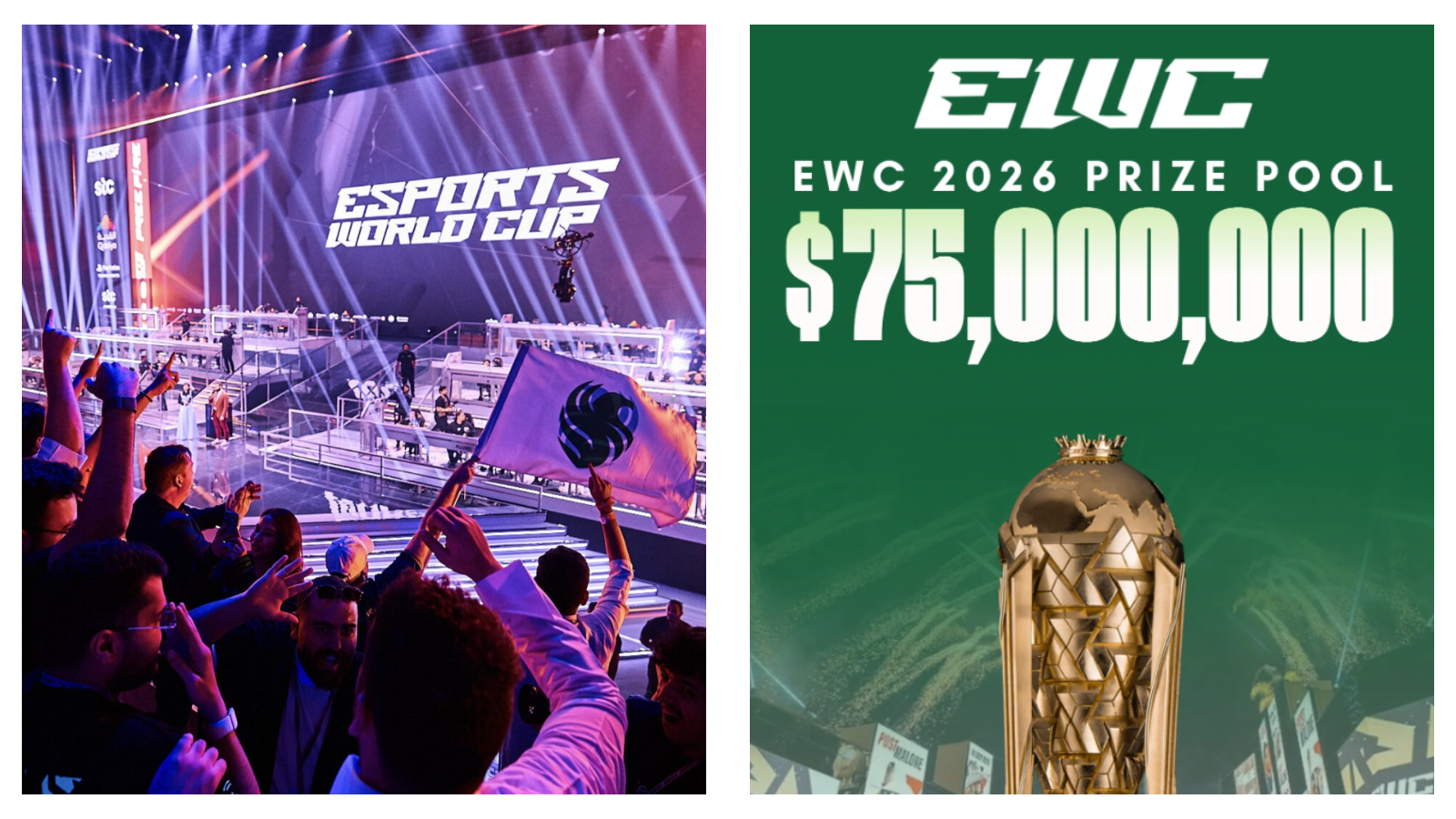
The Esports World Cup (EWC), held each year in Riyadh, is now one of the biggest events on the gaming calendar.
While it doesn’t have as much history as the other cities, that is the only thing lacking.
After two years, it is already the highest-paying tournament in the history of competitive gaming.
The gaps nobody saw
To better understand the EWC, you need to understand what Saudi Arabia has been doing in sport for the better part of a decade.
LIV Golf. The Saudi Pro League. Formula One in Jeddah, plus the notable signings around their football teams.
The pattern is common enough to have a name: sportswashing, an idea that hosting international events makes a government look modern and open.
Esports was always going to be on the list. With a young global fanbase, it was exactly who Vision 2030 wanted to reach.
And unlike football or golf, competitive gaming had no fixed home.
YOU MAY ALSO LIKE: World Cup 2026 news: Thomas Tuchel calls out England’s attack after flat Wembley defeat to Japan
Why the industry followed
It wasn’t an aspect of the industry that loved the place; it was more so the fact that Saudi Arabia had money, a lot of it, which was something nobody could ignore.
The EWC’s Club Championship further cemented the fact that Riyadh was the new home of Esports.
The idea of two tournaments, one for individual games and one for teams, meant that it was another way to attract new players alongside the prize pool.
For organisations usually running on profit margins small enough to make restaurant owners nervous, the teams and players followed.
The cracks
The first edition hadn’t even finished paying out before complaints started.
Reports emerged that players, production workers, and on-screen talent hadn’t actually received what they were owed, and in some cases, this was months after the event had ended.
It wasn’t small amounts either; some lost out on a few thousand, others on six figures.
Severak said they wanted to continue on the 2025 edition despite not being paid.
The EWC foundation said over 99% of payments had been made, but it loses reassurance when you realise what 1% of $60 million actually is.
Then there were walkouts. GeoGuesser pulled out entirely after community backlash and openly cited sportswashing, while notable public figures distanced themselves, citing a misalignment of values, while others didn’t feel safe.
The publishers didn’t make things better, with Riot Games adding a clause to contracts prohibiting content with social or political commentary, alongside anything critical of its sponsors, which now included the EWC.
The uncomfortable part
The complicated part is that the EWC is actually good.
The footage of the max-capacity arenas and players who’ve competed all say the same thing: the EWC is impressive, well-run, and has a crowd behind it.
Which makes the background of it more awkward.
Saudi Arabia criminalises same-sex relationships, which, for a community that includes a large number of LGBTQ+ players and fans, is quite controversial.
The foundation has never addressed it, nor have publications and organisations. And while the players are the most affected, they are the least secure in speaking up.
While conversations do happen, they are mostly online.
The thing money can’t buy
The biggest long-term challenge for the EWC is something money cannot solve; there is no mystery or mythology.
The International — DOTA 2’s annual world championship — didn’t become the most important because Valve kept raising the prize pool, although it has no doubt helped.
It got there through years of moments that fans still talk about, and players who became something close to legends.
The EWC covers more than 20 games across a single summer.
For casual viewers, it’s impossible to follow it all. The moment the event needs to convert viewers to fans hasn’t arrived yet.
What Riyadh actually is
By any measure, Riyadh is now the Esports capital of the world.
The infrastructure, the investment, the prize money: nothing else is close.
Whether it becomes the cultural capital is a different question. The honest read is sportswashing at scale, a government using competitive gaming the same way it uses golf and football.
The more generous read is that esports needed a home, found one, and is figuring out the complications as it goes.
The lucky thing is, both things can be true at once, and only time will tell if the event stays.
READ NEXT: Man Utd opinion: Harry Maguire’s convenient narrative on Ruben Amorim